years before the main story
A Childhood Before Kerry
As a child, [Emma Corrigan](entity:character-recall-character-emma-corrigan-88910f160bc6) lived with her parents in [Twickenham](entity:location-recall-location-89eed361852e) and cherished the closeness of the three of them. That changed when her cousin [Kerry](entity:character-recall-character-kerry-b2b1301e730d) came to stay after her mother died: Kerry was older, confident, and celebrated for her achievements, while Emma felt increasingly overlooked.
Emma's adolescence
A Secret First Romance
Emma lost her virginity to Danny Nussbaum in the spare bedroom while her parents watched Ben Hur downstairs. She kept the memory private, one of the many small confessions she would later blurt out under pressure.
1987
Jack and Pete Build Panther
[Jack Harper and Pete Laidler](entity:relation-recall-relation-jack-harper-and-pete-f2211e28415e) bought the failing Zoot drinks company, transformed its cola into [Panther Cola](entity:object-recall-object-panther-cola-dd25c4e44515), and built a successful brand around the [“Don't Pause” slogan](entity:concept-recall-concept-don-t-pause-34e405a1583b). Their friendship and complementary talents became the company's founding story.
the four years before the story
Emma's False Starts
After college, Emma drifted through estate agency, a photography course, and temp work before finding a position as a marketing assistant at [Panther Corporation](entity:organization-recall-organization-panther-corporat-9da236189dfd). She still owed her father money for the photography course and equipment, and felt her repeated career changes had made her a disappointment.
three years before the story
Pete's Death and Jack's Withdrawal
[Pete Laidler](entity:character-recall-character-pete-laidler-7938508b174d) died in a car crash, devastating [Jack Harper](entity:character-recall-character-jack-harper-3ca8353876e0). Jack withdrew from public life, leaving the company and its employees to wonder whether he would ever return to active business.
before the opening
Connor and Emma's Polished Romance
Emma began dating [Connor Martin](entity:character-recall-character-connor-martin-e820c341a85c), a handsome and capable market researcher whom colleagues admired. She played along with his interests, including jazz, and concealed small insecurities such as her weight and the truth about her clothes, helping the couple appear more compatible than she felt.
before the opening
The Fake Grade
To get her job at [Panther Corporation](entity:organization-recall-organization-panther-corporat-9da236189dfd), Emma claimed she had earned an A in GCSE Maths when she had actually received a C. The lie became one of her most frightening secrets because she feared it could cost her the career she was trying to establish.
the week before her annual review
Emma's Glasgow Assignment
Emma flew from [London](entity:location-recall-location-london-420923d4a60a) to [Glasgow](entity:location-recall-location-a7ae7624794d) to represent [Panther Corporation](entity:organization-recall-organization-panther-corporat-9da236189dfd) in negotiations with [Glen Oil](entity:organization-recall-organization-glen-oil-fd5dbd9a6a6a) over a promotion for [Panther Prime](entity:object-recall-object-panther-prime-cccde0eef28d). Her manager [Paul](entity:character-recall-character-paul-6e5f3b48f63d) had assured her the agreement was nearly settled, and Emma hoped that handling the meeting would help secure a promotion.
during Emma's Glasgow business trip
The Failed Glen Oil Pitch
At [Glen Oil Headquarters](entity:location-recall-location-glen-oil-7169ced55f6e), Emma struggled to follow Doug Hamilton's corporate jargon and did not realize at first that the company was reconsidering its partnership. When [Glen Oil](entity:organization-recall-organization-glen-oil-fd5dbd9a6a6a) objected that [Panther Prime](entity:object-recall-object-panther-prime-cccde0eef28d)'s competitive image clashed with its new identity as a caring petrol brand, Emma improvised a pitch from familiar [Panther Cola](entity:object-recall-object-panther-cola-dd25c4e44515) copy.
the end of the Glasgow negotiations
The Cranberry Spill
Emma tried to seal the argument by opening a can of [Panther Prime](entity:object-recall-object-panther-prime-cccde0eef28d), but the drink erupted across the table and stained Doug Hamilton's shirt. The deal was lost despite his promise not to report the mishap to [Paul](entity:character-recall-character-paul-6e5f3b48f63d), and Emma left believing she had ruined her first major opportunity.
after the failed meeting
Emma Drowns Her Disappointment
At [Glasgow Airport](entity:location-recall-location-2b471154d411), Emma replayed the failure and compared her uncertain career with the apparent success of her friend [Lissy](entity:character-recall-character-lissy-f2885e520fb5). She had already tried estate agency and photography before taking the Panther job, and felt trapped by debt and the fear of failing yet again.
before Emma's return flight
Lissy's Call
[Lissy](entity:character-recall-character-lissy-f2885e520fb5) called Emma and offered comfort after hearing about the failed negotiations. She also passed on the news that [Kerry](entity:character-recall-character-kerry-b2b1301e730d) had won an industry award and would be celebrated at [Rachel](entity:character-recall-character-rachel-84f0cd683952)'s upcoming birthday gathering, renewing Emma's anxiety about being compared with her cousin.
before boarding the return flight
Fear at the Airport
Emma admitted to herself that she was frightened of flying, though she had never told anyone. After drinking several vodkas, she felt more buoyant—until a flight attendant pointed out that her blouse had opened, revealing her pink bra.
just before boarding
A Business Class Upgrade
The flight attendant took pity on Emma and upgraded her to business class, where she was seated beside a dark-eyed American man in jeans. He introduced himself only by his manner, and Emma did not know that he was [Jack Harper](entity:character-recall-character-jack-harper-3ca8353876e0).
during the return flight
The Plane Begins to Turbulence
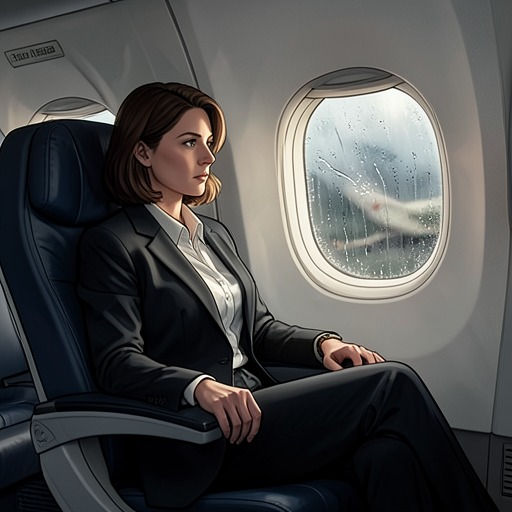
Once airborne, Emma tried to look composed with champagne and a magazine, but every sound and jolt fed her fear. She studied the safety instructions and worried over noises she thought she heard, while Jack remained mostly quiet beside her.
midway through the return flight
The Terrifying Drop
Severe clear-air turbulence sent the plane plunging and passengers and crew tumbling through the cabin. Convinced they were about to die, Emma clutched Jack's hand and began confessing the thoughts she normally hid from everyone.
during the turbulence
Emma Confesses Everything
With her usual restraint gone, Emma told Jack about her career fears, her debt, her false Maths grade, her discomfort with [Connor](entity:character-recall-character-connor-49e9ac9fb7e5), and a stream of smaller private habits and embarrassments. She also admitted longing for passion and a more exciting life, disclosures that made the stranger feel unexpectedly close to her.
the end of the return flight
The Plane Lands Safely
The turbulence subsided, and the plane landed safely. Emma realized she had talked almost continuously to Jack, who had heard her most intimate thoughts, and she was mortified even as she felt relieved to be alive.
immediately after the flight
Connor Meets Emma at Arrivals
[Connor](entity:character-recall-character-connor-49e9ac9fb7e5) had cancelled a meeting and come to the airport after hearing about the turbulence. When Emma emerged, he embraced her and told her that fearing he had lost her made him understand how deeply he cared for her.
at the airport after the flight
The Move-In Decision
[Connor](entity:character-recall-character-connor-49e9ac9fb7e5) proposed that he and Emma move in together, and she accepted while still shaken by the flight and moved by his arrival. The doubts she had voiced to Jack briefly returned to her mind, but she dismissed them as the confused talk of someone who thought she might die.
the following Saturday morning
Morning After the Proposal
Emma woke at [Connor](entity:character-recall-character-connor-49e9ac9fb7e5)'s home and reaffirmed that she wanted to live with him, imagining the step as proof that her life was becoming settled. Their talk of flats and domestic plans, however, soon gave way to awkward signs of how much they were pretending to share.
the morning after the airport proposal
The Jazz Tickets
[Connor](entity:character-recall-character-connor-49e9ac9fb7e5) revealed that he had bought tickets to a jazz concert, assuming Emma would be delighted because she had pretended to enjoy jazz for him. Emma concealed her disappointment again, reinforcing the role of agreeable girlfriend she had played throughout their relationship.
that Saturday morning
Connor Suggests Terms of Endearment
[Connor](entity:character-recall-character-connor-49e9ac9fb7e5) proposed that they call each other “darling” now that they were preparing to live together. Emma agreed despite feeling that the word did not suit her, and recognized another small discomfort she was trying to override in order to become the kind of grown-up couple she thought she ought to be.
that Saturday
Lissy and Jemima's Flat
Back at the flat in [Islington](entity:location-recall-location-30334a96f061), Emma found [Lissy](entity:character-recall-character-lissy-f2885e520fb5) fretting over a magazine's supposed scientific beauty score and reassured her that the test was nonsense. Their fashionable flatmate [Jemima](entity:character-recall-character-jemima-aedaaef9f849) then learned that Emma and [Connor](entity:character-recall-character-connor-49e9ac9fb7e5) planned to move in together and warned that doing so might damage Emma's chances of marriage.
Rachel's birthday weekend
Emma Returns to Her Parents
Emma travelled to [Hampshire](entity:location-recall-location-f4a43c72c67e) for [Rachel](entity:character-recall-character-rachel-84f0cd683952)'s birthday, determined not to feel jealous of [Kerry](entity:character-recall-character-kerry-b2b1301e730d) or let the family upset her. She found Kerry and Rachel comfortable together in the kitchen, while Emma was treated more like a visitor than a daughter.
Rachel's birthday lunch
The Goldfish Impostor
[Rachel](entity:character-recall-character-rachel-84f0cd683952) asked Emma to feed Sammy and worried that the goldfish did not seem himself. Emma knew that the original fish had died and had been replaced, so she distracted Rachel with food and hoped she would not notice the difference.
before the birthday lunch
Grandpa's Keepsakes
Emma visited [Grandpa](entity:character-recall-character-grandpa-6a8c76c37924) in his annexe and brought him [Panther Bars](entity:object-recall-object-panther-bars-b09676b94d04). While helping sort his saved possessions, she found photographs of herself with [Rachel](entity:character-recall-character-rachel-84f0cd683952) and [Brian](entity:character-recall-character-brian-571585bc13fb) before [Kerry](entity:character-recall-character-kerry-b2b1301e730d) arrived, and remembered how the family shifted around the new child after Kerry's mother died.
during Rachel's birthday lunch
Kerry's Performance
At lunch, [Kerry](entity:character-recall-character-kerry-b2b1301e730d) demonstrated her confident businesswoman's walk while the family praised her. Emma remembered that Kerry had rejected her request for work experience, but had kept that humiliation from her parents.
during the birthday present opening
The Competing Birthday Gifts
Emma gave [Rachel](entity:character-recall-character-rachel-84f0cd683952) a thoughtful spa-day package and was pleased by her mother's delight. [Kerry](entity:character-recall-character-kerry-b2b1301e730d) then revealed a lavish Paris trip for Rachel and [Brian](entity:character-recall-character-brian-571585bc13fb), despite Emma having told her months earlier about the spa idea, leaving Emma feeling that Kerry had deliberately upstaged her.
the Monday after Rachel's birthday
The Promotion Hope
Emma went to work imagining that her annual review might turn her into a Marketing Executive and prove her worth to her family. Her optimism reflected how tightly she had tied professional recognition to self-esteem and repayment of her debt to [Brian](entity:character-recall-character-brian-571585bc13fb).
on Emma's way to work
Katie's Bad Weekend
Emma met [Katie](entity:character-recall-character-katie-ed095a72a18d) on the way to the office and learned that Katie's new boyfriend had used her as a free decorator, then criticized her work. Emma urged Katie to end the relationship and encouraged her to try a different lunch place, believing she would meet someone better.
the Monday of Emma's annual review
Jack Harper's Surprise Visit
The [Panther Corporation](entity:organization-recall-organization-panther-corporat-9da236189dfd) office erupted with preparations when employees learned that [Jack Harper](entity:character-recall-character-jack-harper-3ca8353876e0) was visiting. Emma saw the founder arrive and realized that the man from the turbulent flight—the person who knew all her secrets—was her company's most powerful figure.
during Jack's office tour
Jack Recognizes Emma
Jack recognized Emma immediately and teased her about the coffee she had privately called poison on the plane. He also asked about [Artemis Harrison](entity:character-recall-character-artemis-harrison-47d4884b8597)'s new desk, another detail Emma had complained about, confirming that he remembered far more than she had hoped.
after Jack's office introduction
Emma Fears Exposure
Emma remembered that she had confessed to falsifying her Maths grade and feared that Jack would fire her. She confronted him before he could explain, only to learn that the CV lie was not why he had summoned her.
Emma's first private meeting with Jack
Jack's Request for Discretion
Jack asked Emma to keep his recent trip to [Scotland](entity:location-recall-location-783abb4abcea) secret because he did not want anyone to know he had been there. Emma agreed, leaving with the mistaken impression that her confession had not mattered to him and with a new secret of her own to keep.
that evening
Connor Celebrates Jack
At [Connor](entity:character-recall-character-connor-49e9ac9fb7e5)'s flat, he excitedly discussed [Jack Harper](entity:character-recall-character-jack-harper-3ca8353876e0)'s return and the chance to learn from the company's founder. Emma could not share his enthusiasm because she was privately embarrassed by how little she had learned during their flight together.
the following morning
The Forgotten Article
Emma read an article about Jack and Pete, learning more about their partnership and Jack's retreat after Pete's death. She also realized she should have recognized Jack from the news coverage surrounding Pete's fatal crash.
the morning of Emma's review
Aidan and the Kickboxing Lie
At her usual smoothie bar, Emma continued pretending to Aidan that she practised kickboxing, though she had quit after one session. Her small lies had become a habit of managing other people's impressions, even when the truth would have been easier.
Emma's annual review
The Denied Promotion
[Paul Fletcher](entity:character-recall-character-paul-fletcher-06266aade8fc) told Emma that she was performing adequately but was not ready for promotion; the advertised possibility applied only to exceptional candidates. When she pleaded that a new title would impress her family and even offered to pay for business cards, [Paul](entity:character-recall-character-paul-6e5f3b48f63d) rejected the request and told her to create her own opportunities.
after Emma's review
Jack Replaces the Coffee Machine
Emma heard that Jack had ordered a proper new coffee machine for the office and wondered whether he had remembered her complaint. Jack arrived in the marketing department, confirmed that he would observe the team, and teased Emma about the old machine and her plan to skive for coffee.
during Jack's observation
The Fake Office Performance
With Jack watching, the marketing team abandoned its usual habits and pretended to work industriously. Emma admitted privately to Jack in a lift that the office's apparent teamwork and literary discussion had been staged, and he responded with amusement rather than reprimand.
later that day
Connor Meets Jack
[Connor](entity:character-recall-character-connor-49e9ac9fb7e5) joined Emma and Jack in the lift and enthusiastically introduced himself. Jack noticed Connor's orange digital watch and connected it to Emma's private description of her boyfriend as Ken, exposing another confession Emma had thought safely buried.
in the lift and at the department meeting
The Couple's Shared Pretences
Jack needled [Connor](entity:character-recall-character-connor-49e9ac9fb7e5) about jazz and Woody Allen, two interests Emma had pretended to share, while Connor proudly presented dense and inconclusive research. Emma watched her boyfriend's performance with new unease and offered the modest suggestion that her grandfather liked [Panther Bars](entity:object-recall-object-panther-bars-b09676b94d04).
the same departmental meeting
The Ovaries Rejected
A creative team pitched abstract designs, including ovaries, for a proposed women's product line. Jack asked Emma whether she would buy a drink decorated with the images; her honest reaction helped him reject the concept and underscored the contrast between instinctive judgment and polished marketing jargon.
after the meeting
Jack Challenges Emma's Relationship
In a stalled lift, Jack told Emma that [Connor](entity:character-recall-character-connor-49e9ac9fb7e5) would not fulfil her and guessed she did not truly want to move in with him. Emma angrily defended Connor and insisted her private life was none of Jack's business, forcing Jack to apologize and retreat.
the next workday
The Archive-Room Seduction Attempt
Hoping to revive passion with [Connor](entity:character-recall-character-connor-49e9ac9fb7e5), Emma lured him to the archive room and tried to initiate sex at work. The attempt turned awkward when Connor's watch snagged on her clothing, and Jack opened the door to find them tangled together.
the day after the archive-room incident
Emma's Doubts Become Irrefutable
Although Emma and [Connor](entity:character-recall-character-connor-49e9ac9fb7e5) made up physically and planned to view a flat, Emma recognized that she did not want to move in with him. Their relationship looked orderly and ideal from the outside, but she had been suppressing her doubts and pretending to want a future that did not feel right.
that evening
The Breakup
Emma told [Connor](entity:character-recall-character-connor-49e9ac9fb7e5) she could not move in with him and wanted to break up. Connor blamed the plane turbulence and suggested counselling, but Emma explained that the experience had brought her life into focus and that their relationship was wrong for her.
during the breakup
The Cracked Teapot
To explain that she would not keep a relationship merely because it could be patched up, Emma threw the glass teapot [Connor](entity:character-recall-character-connor-49e9ac9fb7e5)'s mother had given them. It cracked rather than shattered, but the gesture helped Connor understand that Emma had made up her mind.
the end of the breakup
Connor Leaves the Jazz Tickets
[Connor](entity:character-recall-character-connor-49e9ac9fb7e5) gave Emma the tickets to the jazz concert, still believing she had been looking forward to hearing it. His parting line, “We'll always have jazz,” made the breakup tender as well as painful and exposed how little he understood her actual tastes.
the following Saturday
The Flatmates Debate Honesty
[Jemima](entity:character-recall-character-jemima-aedaaef9f849) argued that people should pretend in relationships, while Emma maintained that she had not been herself with [Connor](entity:character-recall-character-connor-49e9ac9fb7e5). [Lissy](entity:character-recall-character-lissy-f2885e520fb5) urged Emma to confide in her more, and the two friends promised to tell each other everything—though both still had secrets.
that weekend
Lissy's Hidden Dance Group
When Emma pressed [Lissy](entity:character-recall-character-lissy-f2885e520fb5) about Jean-[Paul](entity:character-recall-character-paul-6e5f3b48f63d), Lissy claimed they had been having sex, but Emma sensed she was hiding something. Lissy's secrecy foreshadowed the complicated truth she would later reveal about her private life and her fear of being laughed at.
Monday after the breakup
Jack's Note and the Leopold File
Emma tried to avoid Jack at work, but found a note from him referring to the nonexistent [Leopold file](entity:object-recall-object-leopold-file-9a298cf13c6e), the old skiving code he had described. She took a fabricated file to Jack's office, where her improvised letter from Ernest P. Leopold amused him and reminded him of Pete.
during their private office meeting
Jack Asks Emma to Dinner
Jack acknowledged Emma's breakup with [Connor](entity:character-recall-character-connor-49e9ac9fb7e5) and asked her to dinner, suggesting they keep the date private because of their workplace connection. Emma accepted eagerly, believing their unusual intimacy and shared plane experience might become a romance.
the following evening
The First Date Begins in Luxury
[Jemima](entity:character-recall-character-jemima-aedaaef9f849) warned Emma that revealing everything to Jack left her vulnerable, while [Lissy](entity:character-recall-character-lissy-f2885e520fb5) regarded the date as romantic. Jack collected Emma in a grand car, offered her sweet sherry, and took her to an exclusive Mayfair restaurant where he had arranged champagne and a meal based on her confessed preferences.
during dinner
The First Date Falters
Emma found herself wishing she could choose her own food and drink, and Jack's remembered details made the evening feel both attentive and overly arranged. When he received repeated phone calls and grew distracted, Emma felt ignored and tried to ask what was wrong; he curtly told her to stop pressing him.
late that night
The Bus Stop Reconciliation
After Jack insisted that Emma wanted a specially ordered dessert, she felt patronized and left the restaurant in the rain. Jack followed her to a bus shelter, apologized for being distracted, and asked for another chance, promising to let her choose how the next date would go.
the end of the first date
Jack Pays for Emma's Bus
Emma refused Jack's car and boarded a [London](entity:location-recall-location-london-420923d4a60a) bus, asking to be left alone. Jack nevertheless rode with her, then paid the driver to take the bus to Emma's street, turning her ordinary journey home into an extravagant, playful gesture that softened her anger.
the following evening
The Second Date Goes Astray
Emma borrowed [Lissy](entity:character-recall-character-lissy-f2885e520fb5)'s membership key and tried to take Jack to a secret club in [Clerkenwell](entity:location-recall-location-03d28cbbde41), but could not remember the correct entrance. She changed plans and led him to [Antonio's](entity:location-recall-location-antonio-s-e22364c67e69) in Clapham, only to discover that it was closed for a family wedding.
later that evening
Pizza on a Clapham Bench
With no suitable restaurant or taxi in sight, Jack suggested that they share takeaway pizza on a park bench. He produced a cocktail shaker and made Emma the pink drink she had wished for at their previous dinner, showing that he could respond to what she wanted rather than merely relying on his assumptions.
the end of the second date
Jack and Emma Kiss
Jack and Emma talked about Pete, and Jack was about to kiss her when [Sven](entity:character-recall-character-sven-9b225feee4ee) arrived with urgent news. Jack had to leave for several days, but before going he kissed Emma passionately and promised they would continue when he returned.
the following Saturday
Emma Prepares for Corporate Family Day
Emma spent the morning grooming herself and carrying condoms, privately expecting that the company event might lead to sex with Jack. At [Panther House](entity:location-recall-location-panther-house-3ce51fb7a114), however, she learned that costumes were compulsory and was pushed into a garish Snow White outfit after arriving without one.
during Corporate Family Day
Katie's Unexpected Companion
Emma met [Katie](entity:character-recall-character-katie-ed095a72a18d) at [Panther House](entity:location-recall-location-panther-house-3ce51fb7a114) and discovered that Katie's new date, [Phillip](entity:character-recall-character-phillip-0559221f1a2c), was an elderly man she had met at a day centre for seniors. Emma was startled by the age difference, but Katie's genuine happiness made the unexpected pairing seem sweet.
around midday at Corporate Family Day
Emma's Pimm's Stall Shift
Emma remembered that she had agreed to work the Pimm's stall with [Connor](entity:character-recall-character-connor-49e9ac9fb7e5) and hurried over late. Connor was curt and suspicious, trying to guess the identity of the man Emma was dating, while Emma anxiously scanned the crowd for Jack.
at the Pimm's stall
Jack Invites Emma Upstairs
Jack arrived in a cowboy costume and asked Emma to discuss the [Leopold file](entity:object-recall-object-leopold-file-9a298cf13c6e) in his suite at one o'clock. Emma understood the invitation as a promise of intimacy, while [Connor](entity:character-recall-character-connor-49e9ac9fb7e5) misidentified the mystery man as Tristan from Design.
one o'clock at Corporate Family Day
The Family Picnic Interruption
Just as Emma was heading to Jack, [Rachel](entity:character-recall-character-rachel-84f0cd683952), [Brian](entity:character-recall-character-brian-571585bc13fb), [Kerry](entity:character-recall-character-kerry-b2b1301e730d), and [Nev](entity:character-recall-character-nev-c4ebac1237d0) unexpectedly arrived in costume after [Artemis](entity:character-recall-character-artemis-6f7e6f87eefa) had told Kerry about the event. Emma was unable to escape the family picnic, so she sent [Sven](entity:character-recall-character-sven-9b225feee4ee) to explain to Jack that her family had appeared.
shortly after the family arrives
Jack Joins the Picnic
Jack came to the picnic and introduced himself simply as Emma's friend, then stayed when [Rachel](entity:character-recall-character-rachel-84f0cd683952) invited him to eat. Emma's family treated him as an unemployed acquaintance until he revealed that he knew the story of [Kerry](entity:character-recall-character-kerry-b2b1301e730d)'s rejection of Emma's work-experience request.
during the Panther House picnic
Emma Confronts Kerry
Jack politely asked [Kerry](entity:character-recall-character-kerry-b2b1301e730d) why she had turned Emma down for unpaid work experience, forcing the old hurt into the open. Emma finally told Kerry that she had spent years feeling diminished by her cousin's boasting and refused to pretend they were close.
immediately after Emma confronts Kerry
The Founder's Identity Revealed
When Cyril summoned Jack to speak with a senior executive, Emma's family learned that the seemingly modest man at their picnic was the multimillionaire founder of [Panther Corporation](entity:organization-recall-organization-panther-corporat-9da236189dfd). Their sudden deference embarrassed Emma, who had wanted them to behave naturally around him.
after his identity becomes known
Jack's Intervention with Kerry
[Kerry](entity:character-recall-character-kerry-b2b1301e730d) tried to present herself as Emma's close ally and promote her travel business to Jack. He calmly exposed the truth about Kerry's earlier rejection, prompting [Rachel](entity:character-recall-character-rachel-84f0cd683952) and [Brian](entity:character-recall-character-brian-571585bc13fb) to recognize that Emma had hidden the hurt because she was ashamed.
later that day at Panther House
Emma and Jack's First Intimate Encounter
Jack took Emma to a private room, where she was still dressed as Snow White, and they kissed passionately. Before their intimacy went further, Emma confessed that she did not know any sexual tricks; Jack reassured her and turned the awkward admission into a playful, intimate moment.
the morning after Corporate Family Day
Emma Falls in Love
Emma woke beside Jack after a night together and felt certain she was in love. She cherished his attentiveness and the fact that he had listened closely to her on the plane, interpreting his interest as acceptance of her whole, imperfect self.
the morning after her night with Jack
Emma's Theory of Sharing
Convinced that openness had brought her and Jack together, Emma imagined writing a relationship book called “Don't Be Scared To Share.” Her new idealism overlooked the imbalance between her own disclosures and Jack's silence about his private life.
the same morning
Lissy's Dance Secret
Emma discovered Jean-[Paul](entity:character-recall-character-paul-6e5f3b48f63d)'s briefcase by [Lissy](entity:character-recall-character-lissy-f2885e520fb5)'s room and, despite deciding not to pry, staged an accidental entrance. She found Lissy and Jean-Paul in dance clothes rehearsing together and learned that Lissy had secretly joined a group of dancing legal professionals.
three weeks before the dance show
Lissy's Fear of the Performance
[Lissy](entity:character-recall-character-lissy-f2885e520fb5) admitted that she was afraid to perform and had considered withdrawing from the show. Emma encouraged her to continue, reminding her that she would regret quitting, and promised to attend despite Lissy's embarrassment about the dance group.
the next two weeks
Jack's Emails and the Women's Line
Emma and Jack exchanged emails while he worked away, and she floated through work believing their relationship was secure. Meanwhile, colleagues talked about Jack's secret project: [Panther Corporation](entity:organization-recall-organization-panther-corporat-9da236189dfd) planned a drink, clothing, and fragrance line aimed at women.
about two weeks after the affair began
Jack's Television Interview
[Paul](entity:character-recall-character-paul-6e5f3b48f63d) ordered Emma to stay behind and answer the phones while the rest of the department watched Jack's Business Watch interview. [Connor](entity:character-recall-character-connor-49e9ac9fb7e5) refused to cover for her because he also wanted to hear Jack, but Emma eventually left her post and slipped into the meeting room.
during the Business Watch broadcast
The Girl on the Street
Asked about Panther's new women's market, Jack described an ordinary office worker who rode the Tube and came home on the night bus. His account drew directly on Emma's habits and tastes, and her colleagues gradually recognized her as his example of “the girl on the street.”
during the same interview
Jack Reveals Emma's Secrets
Jack continued by listing Emma's weight insecurity, thrift-shop clothes, uncomfortable underwear, food preferences, failed exercise routines, and private fantasies. He grew emotionally carried away while praising her hopes and vulnerabilities, but the broadcast exposed details she had trusted him to keep private.
immediately after the interview
Emma Flees the Office
Her colleagues crowded Emma with questions and jokes while calls came from family, the drinks brand, and other interested people. Humiliated and overwhelmed, she fled the office, unable to bear being treated as a public spectacle.
shortly after Emma leaves work
Aidan Hears Emma's Story
Aidan found Emma sitting outside and tried to comfort her, but his advice about using kickboxing only exposed another of her small lies. Emma concluded that Jack had treated her as research for Panther's women's line and that his romantic interest had never been real.
that afternoon at Ellerwood Road
Lissy Misreads the Interview
Emma returned home expecting [Lissy](entity:character-recall-character-lissy-f2885e520fb5) to reject her after hearing about the lesbian dream Jack had revealed. Lissy instead thought Emma might be attracted to her, and the friends awkwardly clarified that the dream did not mean Emma was bisexual or wanted to change their relationship.
that afternoon
Emma Refuses Jack's Call
Jack called to explain, but Emma told him she never wanted to speak to him again and cut him off when he tried to continue. She believed his flowers and romantic gestures had been calculated to make her a useful source of consumer insight.
the same afternoon
Jemima Proposes Revenge
[Jemima](entity:character-recall-character-jemima-aedaaef9f849) urged Emma to retaliate by uncovering and publicizing Jack's private secret, while [Lissy](entity:character-recall-character-lissy-f2885e520fb5) argued that revenge was a mistake. Emma initially resisted, but revealed that Jack had asked her to conceal his trip to [Scotland](entity:location-recall-location-783abb4abcea) and that she had overheard him mention an urgent transfer and “Plan B.”
the following morning
Theories About Jack's Secret
[Lissy](entity:character-recall-character-lissy-f2885e520fb5) and [Jemima](entity:character-recall-character-jemima-aedaaef9f849) speculated about Jack's trip, proposing fraud, plastic surgery, the Mafia, and another woman. Emma insisted she did not want to investigate, although the theories unsettled her and made her wonder whether Jack had deceived her about his private life.
the next workday
Emma Wins a Promotion
When [Paul](entity:character-recall-character-paul-6e5f3b48f63d) praised a [Panther Bars](entity:object-recall-object-panther-bars-b09676b94d04) coupon campaign in Bowling Monthly, Nick took credit for the idea Emma had suggested for her grandfather. Emma challenged him, explained that older customers liked the bars because they could eat them without removing their false teeth, and impressed Paul with her unvarnished insight.
during the same office exchange
Emma Claims Her Work
Emma asked [Paul](entity:character-recall-character-paul-6e5f3b48f63d) directly for a promotion, arguing that she had created her own opportunity and earned the advancement he had told her to pursue. Paul agreed to make her a Marketing Executive, and Emma then admitted that she had broken his mug, jammed the copier, and owned the photocopied bottom on the noticeboard.
after receiving the promotion
Emma Reconnects with Her Parents
Emma called [Rachel](entity:character-recall-character-rachel-84f0cd683952) and [Brian](entity:character-recall-character-brian-571585bc13fb) to share the news, and they responded with pride and arranged to celebrate with her. Rachel spoke frankly about a past short romance, while the family began cautiously repairing its strained relationship with Emma after the confrontation over [Kerry](entity:character-recall-character-kerry-b2b1301e730d).
three weeks after the dance group began rehearsing
Lissy Takes the Stage
Before the show, [Lissy](entity:character-recall-character-lissy-f2885e520fb5) panicked and nearly went home, but Emma reminded her that retreat would leave her with regrets. Lissy performed a striking, expressive dance and appeared radiant onstage, revealing a side of herself Emma had never known.
after Lissy's performance
Connor Seeks an Honest Answer
[Connor](entity:character-recall-character-connor-49e9ac9fb7e5) told Emma that he had started seeing Francesca and asked whether Emma had been honest about their sex life. Emma admitted that one of his techniques sometimes made her want to laugh, then discovered Francesca had claimed to enjoy the same things Emma had pretended to like.
during the post-show gathering
Jemima Brings a Reporter
Emma spotted [Jemima](entity:character-recall-character-jemima-aedaaef9f849) with Mick Collins, a tabloid journalist, and learned that Jemima had asked him to investigate Jack's Scottish secret. Emma tried to stop the interview, but Jack entered and found the reporter, recorder, and Jemima together.
immediately after the reporter is discovered
Jack Misunderstands Emma's Role
[Jemima](entity:character-recall-character-jemima-aedaaef9f849) proudly told Jack that Emma wanted revenge and had directed the journalist toward his secret. Emma could not get out the explanation in time; Jack looked betrayed and walked away believing she had deliberately endangered the information he had trusted her with.
moments later
Emma Fails to Stop Jack
Emma chased Jack into the street and insisted that [Jemima](entity:character-recall-character-jemima-aedaaef9f849) had arranged the meeting, that the reporter knew only about [Scotland](entity:location-recall-location-783abb4abcea), and that she had not intended to sell his secret. She admitted she had mentioned the trip out of hurt and anger, but Jack left without accepting her explanation.
after Jack leaves
Emma Returns to the Auditorium
Emma returned to the party and ordered [Jemima](entity:character-recall-character-jemima-aedaaef9f849) never to let the reporter learn more, threatening to expose the secrets Jemima guarded about her clothes and social image. Although [Lissy](entity:character-recall-character-lissy-f2885e520fb5) defended Emma, Emma blamed herself for revealing Jack's trip at all and withdrew to the empty auditorium.
later that night
Connor and Francesca's Doubts
Alone in the auditorium, Emma overheard [Connor](entity:character-recall-character-connor-49e9ac9fb7e5) and Francesca arguing because Connor no longer trusted her answers about what she liked. Emma tried to help them by urging Francesca to be honest, but Francesca simply told Emma to leave them alone.
soon after the performance
Jack's Confession of Small Secrets
Outside the auditorium, Jack found Emma and began telling her his own private embarrassments: his fear of the dark, dislike of caviar, insecurity about his French accent, childhood mischief, and doubts in board meetings. He told her that meeting a girl on a plane had changed his life and said he believed she had not betrayed him.
during their walk after the performance
Jack Reveals Alice's Identity
Jack explained that he had gone to [Scotland](entity:location-recall-location-783abb4abcea) to visit [Alice](entity:character-recall-character-alice-c37947fad76f), the four-year-old daughter of [Pete Laidler](entity:character-recall-character-pete-laidler-7938508b174d). Pete had kept her existence secret while alive, and her mother Marie wanted her to grow up outside the glare of the press and the expectations attached to her father's fortune.
during the same conversation
The Reason for Jack's Secrecy
Jack said he learned of [Alice](entity:character-recall-character-alice-c37947fad76f) only after Pete's death and had become fiercely protective of her. He explained that his calls and abrupt departure concerned a road accident involving Alice and Marie, and that he had hidden his Scottish trip to protect their privacy.
after Jack explains the secret
Emma Invites Jack to the Show
Jack apologized for shutting Emma out and thanked her for keeping the secret. Emma recognized that he had trusted her with something precious and invited him to watch [Lissy](entity:character-recall-character-lissy-f2885e520fb5)'s performance, allowing their connection to reopen without erasing the hurt between them.
just before the performance
Jemima's Call Renews the Crisis
As Emma and Jack headed into the auditorium, [Jemima](entity:character-recall-character-jemima-aedaaef9f849) called to announce that she had already brought Mick Collins into the matter and intended to expose Jack's secret. Emma tried to make her stop, but the call ended before she could learn what Jemima had done.
during the post-performance gathering
Jack Sees the Interview Setup
[Jemima](entity:character-recall-character-jemima-aedaaef9f849) brought Mick into a small room and tried to make Emma participate in an interview. Jack entered with water and found them with the journalist's recorder; when Jemima announced that she had targeted his Scottish secret, Jack believed Emma had broken her promise and walked out.
immediately after Jack leaves the room
Emma's Explanation Comes Too Late
Emma ran after Jack and said she had not intended to reveal [Alice](entity:character-recall-character-alice-c37947fad76f)'s identity or encourage the journalist, and that [Jemima](entity:character-recall-character-jemima-aedaaef9f849) alone had arranged the interview. She admitted telling Jemima about [Scotland](entity:location-recall-location-783abb4abcea), but Jack got into his car and drove away before they could reconcile.
the next morning
Emma Chooses to Face Work
After a painful night, Emma dreaded returning to the office, where the television interview had turned her private life into gossip. [Lissy](entity:character-recall-character-lissy-f2885e520fb5) encouraged her to go in and promised to be there afterward, helping Emma face the humiliation rather than hide from it.
the next morning before work
Jack's Flowers
A delivery man brought Emma an extravagant bouquet from Jack, but she initially refused to accept it because she feared doing so would imply forgiveness. [Jemima](entity:character-recall-character-jemima-aedaaef9f849) argued that keeping the flowers could instead signal indifference, and Emma signed for them while making clear that she did not forgive him.
Emma's first day back after the interview
The Office Mocks Emma
Emma found colleagues trading jokes about her Barbie bedcover, weight, jazz pretence, and other disclosures. She tried to keep her composure, but the teasing made clear that the exposure had not passed quickly and that ordinary workplace interactions had become painful.
that morning in the office restroom
Katie Learns the Truth About Crochet
[Katie](entity:character-recall-character-katie-ed095a72a18d) confronted Emma about Jack's claim that Emma hated crochet. After speaking with her family, Katie realized they had all been pretending to like her handmade gifts, and she was hurt that Emma had never told her the truth to spare her feelings.
later that morning
Emma's Parents Visit the Office
[Rachel](entity:character-recall-character-rachel-84f0cd683952) and [Brian](entity:character-recall-character-brian-571585bc13fb) arrived at [Panther Corporation](entity:organization-recall-organization-panther-corporat-9da236189dfd) to see Emma and awkwardly praised her job in front of her colleagues. Their nervousness showed that they had come not merely to visit but to address the distance between them.
during the morning visit
The Family Reconciles
Over coffee, [Rachel](entity:character-recall-character-rachel-84f0cd683952) and [Brian](entity:character-recall-character-brian-571585bc13fb) told Emma they would clear her debt, offered to buy her a car, and invited her on a holiday with just the three of them. Brian struggled to say the words, but finally told Emma that he loved her; Rachel and Brian then said they were proud of her.
at the end of the family conversation
Jack Returns to Emma
As Emma's parents left the coffee shop, Jack arrived and asked to speak with her. Emma refused to leave her parents or hear him at first, but he stayed nearby, determined to explain why he had spoken about her on television.
immediately after her parents leave
Jack Explains the Women's Line
Jack said that Emma had influenced his thinking about the women's line, but insisted that his work did not make his feelings for her false. He had asked producers to remove the personal section of the interview, but was carried away while defending the idea that he understood an ordinary woman.
during their street conversation
Emma Demands Mutual Honesty
Emma challenged Jack for sharing her secrets while keeping his own, and asked again about [Scotland](entity:location-recall-location-783abb4abcea) and his unexplained calls. Jack refused to reveal the private matters he considered sensitive, and Emma concluded that their relationship could not be equal if trust flowed in only one direction.
the end of their argument
Emma Ends the Reconciliation Attempt
Emma told Jack that she would not accept a relationship in which he treated his secrets as more important than hers. She walked away in tears, still hurt by the television exposure and unwilling to continue until he trusted her with more of himself.
that evening
Jemima and Lissy Plan Revenge
Emma told [Lissy](entity:character-recall-character-lissy-f2885e520fb5) and [Jemima](entity:character-recall-character-jemima-aedaaef9f849) that Jack had refused to explain his secret, and Jemima proposed that Emma investigate and expose it. Emma resisted the idea of searching through rubbish or pursuing revenge, but she revealed what she had overheard about [Scotland](entity:location-recall-location-783abb4abcea), a transfer, and “Plan B.”
the following morning
Emma's Three Friends Speculate
[Lissy](entity:character-recall-character-lissy-f2885e520fb5) and [Jemima](entity:character-recall-character-jemima-aedaaef9f849) developed theories about Jack, ranging from fraud and plastic surgery to an affair with another woman. Emma rejected their speculation, but the possibility of another relationship unsettled her even as she insisted she did not care.
the day after the women's dance performance
Emma's Promotion Takes Effect
Emma arrived at work newly promoted to Marketing Executive, carrying herself with more confidence after claiming credit for the Bowling Monthly campaign. Her change in self-respect mattered beyond the title: she began admitting small mistakes instead of hiding them and stopped treating honesty as a liability.
that evening
Emma Comes to Lissy's Show
Emma attended the dance performance and watched [Lissy](entity:character-recall-character-lissy-f2885e520fb5) shine despite her earlier fear. Afterward, Lissy told Emma the group might tour, and Emma was proud of her friend's unexpected accomplishment.
after Lissy's performance
Jack Appears at the Theatre
Jack arrived at the theatre with the flyer from Emma's desk and said he wanted to talk. Emma pretended she had come with another man, but the stranger she approached walked away, leaving her exposed in front of Jack.
during their conversation at the theatre
Jack Offers the Scotland Truth
Jack told Emma he had come specifically to explain what he had been doing in [Scotland](entity:location-recall-location-783abb4abcea). Emma initially insisted she was no longer interested, but admitted she would hear him and followed him to a quiet spot away from the crowd.
the quiet conversation after the performance
Jack Reveals Alice's Parentage
Jack told Emma that [Alice](entity:character-recall-character-alice-c37947fad76f) was [Pete Laidler](entity:character-recall-character-pete-laidler-7938508b174d)'s daughter, a child whose identity had been kept secret so she could grow up normally and away from public scrutiny. Jack had become protective of Alice after Pete's death and had travelled to [Scotland](entity:location-recall-location-783abb4abcea) to visit her and her mother, Marie.
after Jack's revelation
Emma Understands Jack's Silence
Jack explained that [Alice](entity:character-recall-character-alice-c37947fad76f) and Marie had been in a road accident, making his urgent calls and sudden departure necessary. Emma understood why he had been guarded and recognized that his secret was not an excuse or an affair but a promise of protection to a child.
the end of the theatre conversation
Emma Invites Jack Back
Jack apologized for the hurt caused by his secrecy and said Emma had been discreet while he had not. Emma invited him to watch [Lissy](entity:character-recall-character-lissy-f2885e520fb5)'s performance, and the warmth between them returned as they walked toward the auditorium together.
just before the show
Jemima's Reporter Threat
[Jemima](entity:character-recall-character-jemima-aedaaef9f849) called Emma and revealed that she had brought a tabloid journalist into the situation, hoping to expose Jack's secret as revenge. Emma tried to stop her, but the call ended abruptly, leaving her afraid that [Alice](entity:character-recall-character-alice-c37947fad76f)'s identity might be discovered.
after Lissy's performance
The Secret Is Nearly Exposed
[Jemima](entity:character-recall-character-jemima-aedaaef9f849) brought Mick Collins into a private room and tried to get Emma to confirm Jack's connection to [Scotland](entity:location-recall-location-783abb4abcea). Jack entered and saw the journalist and recorder; Jemima announced that Emma had helped her, and Jack left believing Emma had betrayed his trust.
immediately afterward
Emma's Final Plea
Emma chased Jack outside, insisting that the journalist knew nothing about [Alice](entity:character-recall-character-alice-c37947fad76f) and that [Jemima](entity:character-recall-character-jemima-aedaaef9f849) had arranged the encounter without her consent. She admitted she had mentioned [Scotland](entity:location-recall-location-783abb4abcea) but said she had only wanted to know Jack's ordinary private secrets; Jack drove away before she could persuade him.
later that night
Jack Returns to the Auditorium
Emma returned to the venue and hid in the empty auditorium, convinced she had ruined the relationship by failing to stop [Jemima](entity:character-recall-character-jemima-aedaaef9f849). After mistaking [Connor](entity:character-recall-character-connor-49e9ac9fb7e5) and Francesca for Jack in the darkness, she left the room and unexpectedly found Jack waiting outside.
near the end of the evening
Jack Shares His Own Secrets
Jack confessed that he was afraid of the dark, disliked caviar, felt insecure about his height, and had once asked to keep a girl's bra after losing his virginity. He continued with the small, imperfect truths he had withheld, ending with the admission that the girl from the plane had changed his life.
the end of the story
Emma and Jack Reconcile
Jack acknowledged that Emma had not betrayed him, and she welcomed the chance to hear the rest of his story. Walking together through the courtyard, they began to rebuild their relationship through reciprocal honesty rather than the one-sided confessions that had defined it before.
after the reconciliation
Emma's Remaining Little Secrets
Emma reflected that she had become more open, though she still kept ordinary private thoughts to herself, such as her doubts about a family recipe and her plans for possible children's names. The ending leaves her with a lighter understanding of honesty: intimacy need not mean abandoning every small boundary.